

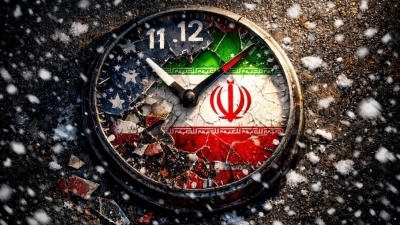
Instead of a swift collapse of the Iranian regime or a strategic crushing of Tehran's military power, the conflict ended up revealing the resilience of the Islamic Republic and the limits of American power
The conflict between the United States, Israel, and Iran reveals a profound strategic deadlock in American policy within the Middle East. Despite public declarations of success by US President Donald Trump, the actual data shows that Washington's core objectives were not achieved. This serves as a historic confirmation for BN, which from the first days of the war warned of the impending failure of the US and Israel in the war against Iran.
Instead of a rapid collapse of the Iranian regime or a strategic crushing of Tehran’s military power, the conflict ended up revealing the resilience of the Islamic Republic and the limits of American power. Trump’s statements that the war "will end soon" because "there is almost nothing left to hit" reveal more of a political necessity for withdrawal and disengagement rather than an actual military victory.
Meanwhile, US and Israeli officials admit that there is no clear directive for ending operations, while Israel states that the war will continue "without a time limit." This contradiction shows that Washington is attempting to present a withdrawal as a strategic success. The US operation "Epic Rage" against Iran ended in an... epic Fiasco, and internally, the US will certainly attempt to shift the blame for the failure onto Israel.
Iran rejects temporary ceasefire
According to journalistic sources, Tehran has already rejected two messages regarding a ceasefire conveyed to Iranian authorities by the US special envoy Steve Witkoff. Iran has turned down two requests for a truce delivered by Witkoff through mediation channels, according to reports from WANA News and international media outlets.
The Foreign Ministry in Tehran and other officials have categorically stated they have no interest in ceasefire negotiations as long as there is no permanent, binding agreement that excludes future aggression from the US or Israel. Abbas Araghchi, Iran’s Foreign Minister, has repeatedly stated that Iran has not requested a ceasefire and that Tehran's priority is continuing the fight for the sake of the people and deterring future attacks rather than a cessation of hostilities.
Iran sets 3 conditions for peace
Iranian President Masoud Pezeshkian made a critical diplomatic intervention via the platform X, setting the framework under which Tehran would accept a cessation of hostilities in the region. Blaming the flare-up on the "Zionist regime" and the US, the Iranian leader presented a roadmap that includes the recognition of sovereign rights, economic reparations, and international security safeguards, opening a new cycle of discussion on the international political stage.
Specifically, he said: "In conversations with the leaders of Russia and Pakistan, I reaffirmed Iran's commitment to peace in the region. The only way to end this war, sparked by the Zionist regime and the US, is the recognition of Iran's legitimate rights, the payment of reparations, and the provision of strong international guarantees against future attacks."
Talking to leaders of Russia and Pakistan, I reaffirmed Iran’s commitment to peace in the region. The only way to end this war—ignited by the Zionist regime & US—is recognizing Iran’s legitimate rights, payment of reparations, and firm int'l guarantees against future aggression.
— Masoud Pezeshkian (@drpezeshkian) March 11, 2026
Original US objectives – None achieved
When Trump announced the first attacks on February 28, he defined four core objectives:
-
Destruction of the Iranian missile program
-
Elimination of the Iranian Navy
-
Neutralization of Iran’s regional allies
-
Prevention of the acquisition of nuclear weapons
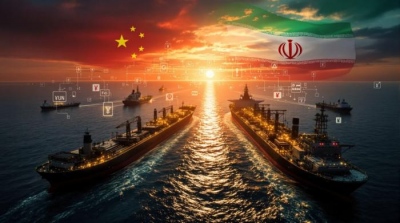
However, reality proved to be very different. Despite extensive air strikes, Iran continues to maintain significant military capabilities. Even American announcements that certain ships placing mines in the Strait of Hormuz were destroyed do not change the fact that Iran still has the ability to threaten one of the world's most vital energy arteries.
The Strait of Hormuz remains the most critical strategic point for the global oil market. The fact that Tehran was even able to consider mining the area shows that the US deterrence strategy failed to neutralize Iran's capabilities.
Washington's great strategic misunderstanding
The greatest failure of American strategy is not military but political. For more than twenty years, much of the political debate in Washington was based on the assumption that the Iranian regime is fragile and that sufficient external pressure—sanctions, military strikes, or covert operations—could eventually lead to regime change.
However, a recent assessment by the US National Security Council reached a completely different conclusion: even a large-scale military campaign is unlikely to lead to a regime collapse. This analysis highlights something that American planners seem to have ignored: Iran's political system possesses institutional mechanisms that allow for the maintenance of political continuity even in times of crisis.
Iran's resilience
The rapid rise of Mojtaba Khamenei to leadership following the death of Ali Khamenei is a characteristic example of this resilience. The transition of power took place relatively quickly and without serious internal conflict. The Assembly of Experts chose Mojtaba as the new Supreme Leader, and key centers of power—particularly the Revolutionary Guard—were quick to pledge loyalty to the new regime.
This process proved that the political system of Iran does not depend on a single person but on a broader network of power institutions. At the core of this system is the Islamic Revolutionary Guard Corps (IRGC), which has evolved into one of the country's most powerful organizations. The IRGC is not merely a military force; it functions simultaneously as an intelligence agency, an economic giant, and a political mechanism. Its influence extends to sectors such as energy, construction, and telecommunications, making it a central pillar of the Iranian state.
The "Axis of Resistance" strategy
Another element complicating American strategy is the regional security architecture that Iran has created. Through the so-called "Axis of Resistance," Tehran has developed a network of allies across the Middle East. This network includes Hezbollah in Lebanon, Shiite militias in Iraq, allied forces in Syria, and the Houthis in Yemen.
Instead of relying exclusively on conventional military forces, Iran has adopted a strategy of asymmetric deterrence. In other words, it creates multiple pressure fronts that can be activated in the event of conflict. This means that the US and Israel do not face a single opponent but a multi-layered network of forces that can strike targets in different regions.
Economic and political pressure
Tehran calculated perfectly that attacks on infrastructure and the suspension of air traffic would frighten investors and tourists—vital sources of revenue for many Persian Gulf states. The threat to civilian lives, particularly in cities near bases like Bahrain, intensified pressure on regimes to demand that the United States limit the war or withdraw.
Furthermore, the excessive strengthening of Israel causes resentment among Arabs and fueled unrest in Gaza and the West Bank, with the "Arab street" watching developments with rage. In other words, Iran's strategy was to make the cost of the American presence in the Gulf "unacceptable" for allied countries, creating a combination of economic, political, and social pressure that can limit American escalation. The economic pressure through the intimidation of investors and tourists is another factor. The strategy seems aimed at making the cost of the US presence in the Gulf "unacceptable" for Washington's allies. Meanwhile, attacks on Israel focused on Ashkelon, Jerusalem, Tel Aviv, and Haifa.
The war strengthened the Iranian regime instead of weakening it
Historically, external conflicts often strengthen existing regimes rather than weakening them. War bolsters national forces, limits internal confrontations, and allows the state to expand security powers. This is exactly what appears to be happening in Iran.
The conflict with the US and Israel is presented by the Iranian leadership as a struggle for national survival. This narrative strengthens internal cohesion and reduces the appeal of any opposition. Instead of a regime collapse, the conflict may eventually lead to the creation of an even more centralized and militarized state.
Political management of "victory"
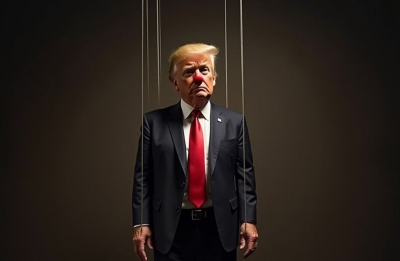
Trump's statement that "whenever I want the war to end, it will end" must be read within this context. When a military operation does not achieve its core goals, governments often try to redefine the meaning of success.
The American rhetoric is shifting from "regime change" to "punishing" Iran for its actions in the region. This allows Washington to present a gradual disengagement as a success rather than a failure. BN is fully vindicated, as from the first days of the conflict, it informed its readers that the American president was trying to disengage from this disastrous war.
Geopolitical reality
Iran has proven that it possesses a unique capacity for survival in the face of external pressure.
It has survived:
-
The disastrous war with Iraq in the 1980s
-
Decades of economic sanctions
-
Internal political crises
-
Leadership changes
Today's conflict appears to confirm this historical resilience.
A war that strengthened the opponent
The US strategy in Iran was based on a false assumption: that the Iranian regime is on the brink of collapse.
Reality proved the opposite.
Instead of leading to regime change, the conflict:
-
Strengthened the cohesion of the Iranian state
-
Consolidated the power of the Revolutionary Guard
-
Created a new leadership more closely linked to the military establishment
-
And increased regional instability
Ultimately, the war designed to weaken Iran may have the exact opposite effect: strengthening a more centralized, militarized, and determined Iranian state. Trump’s statement that the war "will end soon" is not an indication of victory, but an acknowledgment that Washington's initial goals are no longer feasible.
The US "broke their teeth"
The United States' strategy toward Iran appears to be failing, with Trump being forced to modify his public statements, according to political scientist Farhad Ibragimov, an expert on Middle Eastern issues. Ibragimov points out that the White House's initial hopes for a quick collapse and change of power in the Islamic Republic had no basis.
"The US may break their teeth in Iran," he notes, referring to the surge in popular support for the authorities and the demand for "harsh revenge" for Ali Khamenei. Protests are not directed against the government but call for retaliation, thus strengthening the internal cohesion of the regime.
According to Ibragimov, speaking to news.ru, if at the start of the operation Trump had set regime change as the goal, he is now limiting his statements to the "demilitarization" of Iran. The assassination of leaders does not lead to collapse, as the regime is renewed and "fresh blood" takes over governance, making the realization of the original American destabilization plan impossible. Meanwhile, Anna Evstigneeva, Russia’s Deputy Permanent Representative to the UN, stressed at a Security Council meeting that the US-Israel military adventure is plunging the Middle East into even greater chaos, with numerous civilian casualties.
Fatal rift inside the US
One of the less discussed but particularly significant factors affecting the progress of the conflict with Iran is the deep political rift the war caused within the United States. The military operation created not only international tensions but also intense internal political conflict in Washington, revealing deep disagreements in the American political system regarding the US role in the Middle East.
From the first moment of the conflict, the Trump administration's decision to proceed with large-scale military attacks without a clear exit strategy sparked strong reactions in Congress, from both the Democratic party and sections of the Republicans. The debate was not limited to the legality of military action but extended to the question of whether the US can or should get involved in yet another war in the Middle East after the experiences in Iraq and Afghanistan.
Many American politicians and analysts argued that the conflict with Iran risks evolving into a new long-term military involvement without a clear goal. This concern was bolstered by the fact that even the government itself struggled to explain exactly what the final result it seeks is. Initially, the rhetoric focused on "weakening" Iran and neutralizing its military power. Subsequently, statements appeared suggesting that the real pursuit was regime change.
Deep disagreements
This strategic ambiguity created deep disagreements even within Trump's own camp. Within the Republican party, a clear gap emerged between traditional neoconservatives who favored a more aggressive policy and those who supported a more limited foreign policy (MAGA).
Neoconservative circles in Washington viewed the conflict with Iran as an opportunity to reshape the geopolitical balance in the Middle East and weaken one of the primary rivals of the US and Israel. Conversely, a growing number of politicians and analysts warned that a war with Iran could prove much more dangerous and costly than previous American interventions in the region.
This rift was not limited to the political level. American public opinion also appeared deeply divided. Polls conducted during the conflict showed that a large portion of American citizens feared the conflict could turn into a new "endless war," similar to those that followed the interventions after September 11, 2001.
The fatigue of American society from two decades of wars in the Middle East is a critical factor limiting Washington's political ability to engage in a new large-scale military campaign. The experience of the war in Afghanistan and Iraq has created deep distrust toward military interventions that promise quick victories but end in long-term and expensive conflicts.
This internal political pressure largely explains the shift in the Trump administration's rhetoric. Initial statements about a campaign that could last weeks were gradually replaced by statements claiming that core objectives have already been achieved and that the war can end soon. In other words, the political reality inside the United States acts as a significant limiting factor for the continuation of the conflict.
Washington faces not only the military challenges created by Iran but also the political pressures coming from the American political system itself and society. In this context, the discussion about ending the war does not necessarily reflect a complete US military success, but rather a forced adjustment to a new reality: a conflict that proved more complex, more dangerous, and politically more costly than Washington's strategic planners had initially calculated.
www.bankingnews.gr







Σχόλια αναγνωστών